



Solana has begun rolling out Alpenglow on testnet, moving its planned blockchain consensus overhaul into a public testing environment.
The upgrade targets finality of about 150 milliseconds, down from roughly 12.8 seconds under TowerBFT, the system Solana validators currently use to agree on blocks. Alpenglow replaces that consensus layer while leaving the Solana Virtual Machine, transactions, programs, and fees unchanged.
Its first phase introduces Votor, which replaces the vote transactions validators currently put onchain with votes sent directly between validators. Those votes are combined into certificates that can finalize a block within one or two voting rounds, cutting the wait for an irreversible transaction by about 99%.
Anza, the developer behind Solana’s Agave validator software, said that testnet was entering the rollout process, ahead of deployments on devnet and eventually mainnet-beta. The migration builds on months of preparation across validators and infrastructure providers, which must adjust systems that stream blocks, track votes, or rely on Solana’s existing commitment structure.
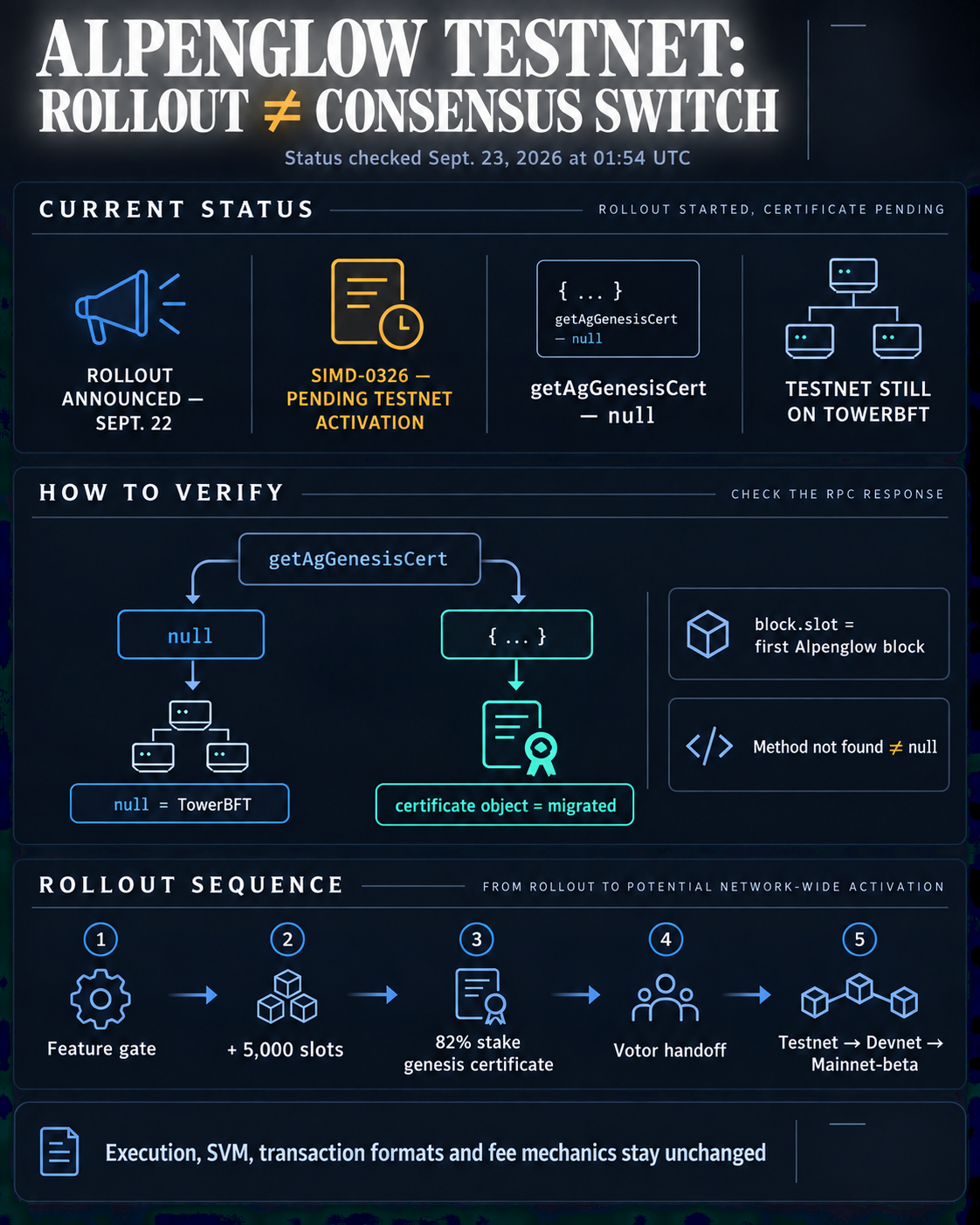
Alpenglow will later add Rotor, a replacement for Turbine, Solana’s system for distributing block data across the network. Rotor is scheduled separately, leaving Votor and faster finality as the rollout’s immediate focus.
The consensus overhaul follows another wave of performance upgrades. Solana activated Transaction V1 this month, lifting maximum transaction size to 4,096 bytes from 1,232, while its slot-time roadmap has progressively cut the target from 400 milliseconds toward 200 milliseconds.
SOL approaches January levels as network activity expands
The technical push is arriving alongside a recovery in SOL and expanding activity across several parts of the ecosystem.
SOL traded around $117 as of press time after reaching almost $120 this week, putting the token around its strongest level since late January. It has gained roughly 25% over the past month, CryptoSlate’s data shows.
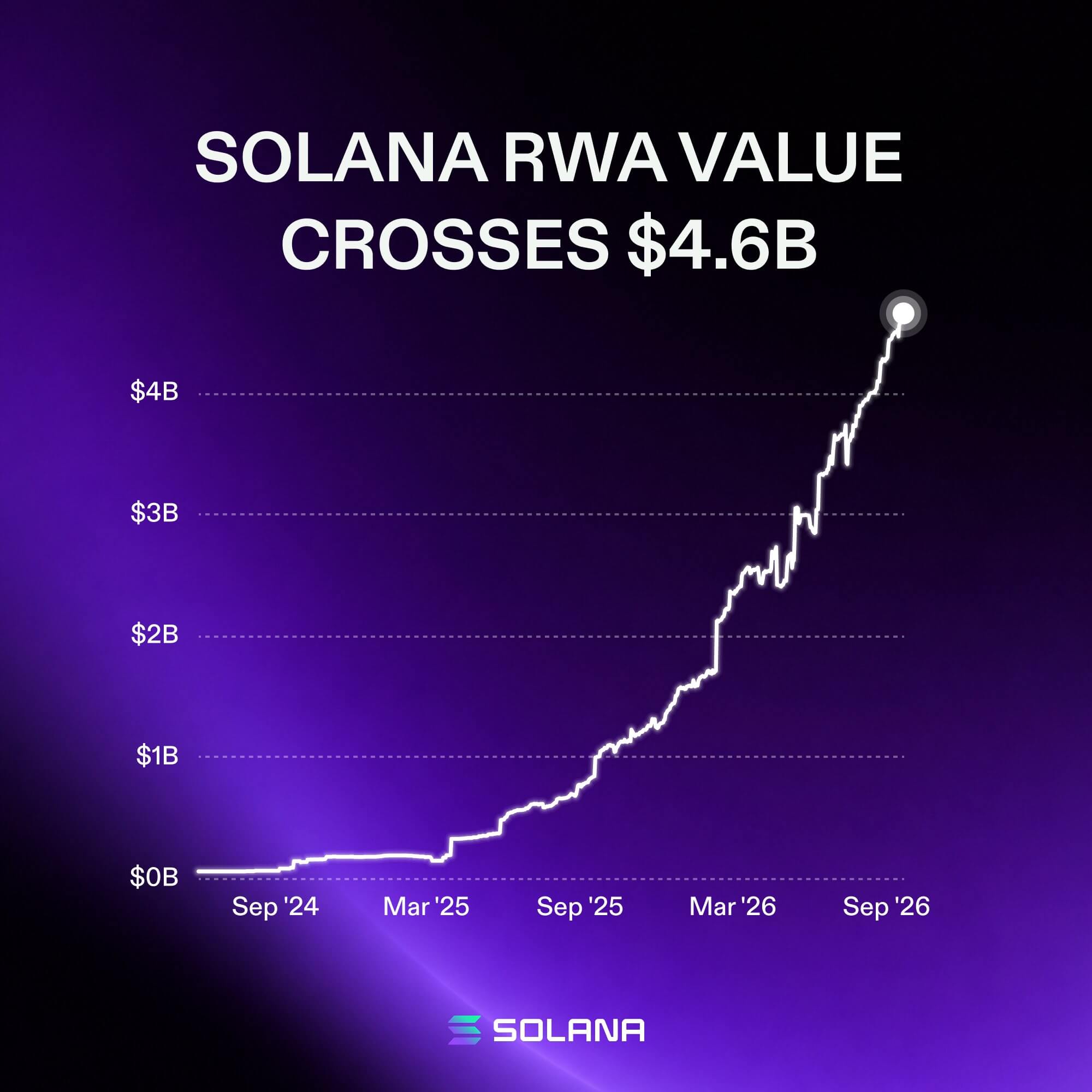
Solana has also been drawing more tokenized traditional assets. Real-world assets on the network reached about $4.6 billion in early September, extending a climb that took the sector through $4 billion for the first time in August.
Trading activity has accelerated alongside it. Solana decentralized exchanges recorded about 208 million individual spot trades in the week ending Sept. 13, compared with roughly 190 million on the New York Stock Exchange, according to data cited by the Kobeissi Letter. The gap with Nasdaq narrowed to about 47 million trades. Jupiter accounted for more than 80 million trades during September, up 38% from the previous month.
That growth has strengthened an increasingly aggressive investment case from some of Solana’s longtime backers. Multicoin Capital co-founder Kyle Samani reportedly said that he expects SOL’s market capitalization to surpass Ethereum’s during the current market cycle, arguing that developers are increasingly choosing Solana and pointing to its recent lead over Ethereum in network fees.
The gap remains substantial: Samani’s comparison put Solana near $58 billion against about $293 billion for ETH.
For Solana, the more immediate test now moves back to the network itself. Testnet gives validators and infrastructure providers the first broad environment to run Alpenglow before the consensus system advances to devnet and, ultimately, the mainnet that will carry Solana’s growing trading and tokenized-asset economy.
The post Solana moves Alpenglow into testnet as SOL nears January highs appeared first on CryptoSlate.



