



Bitcoin Magazine
Top U.S. Pacific Commander Calls Bitcoin a “Valuable Computer Science Tool” for National Power And Security
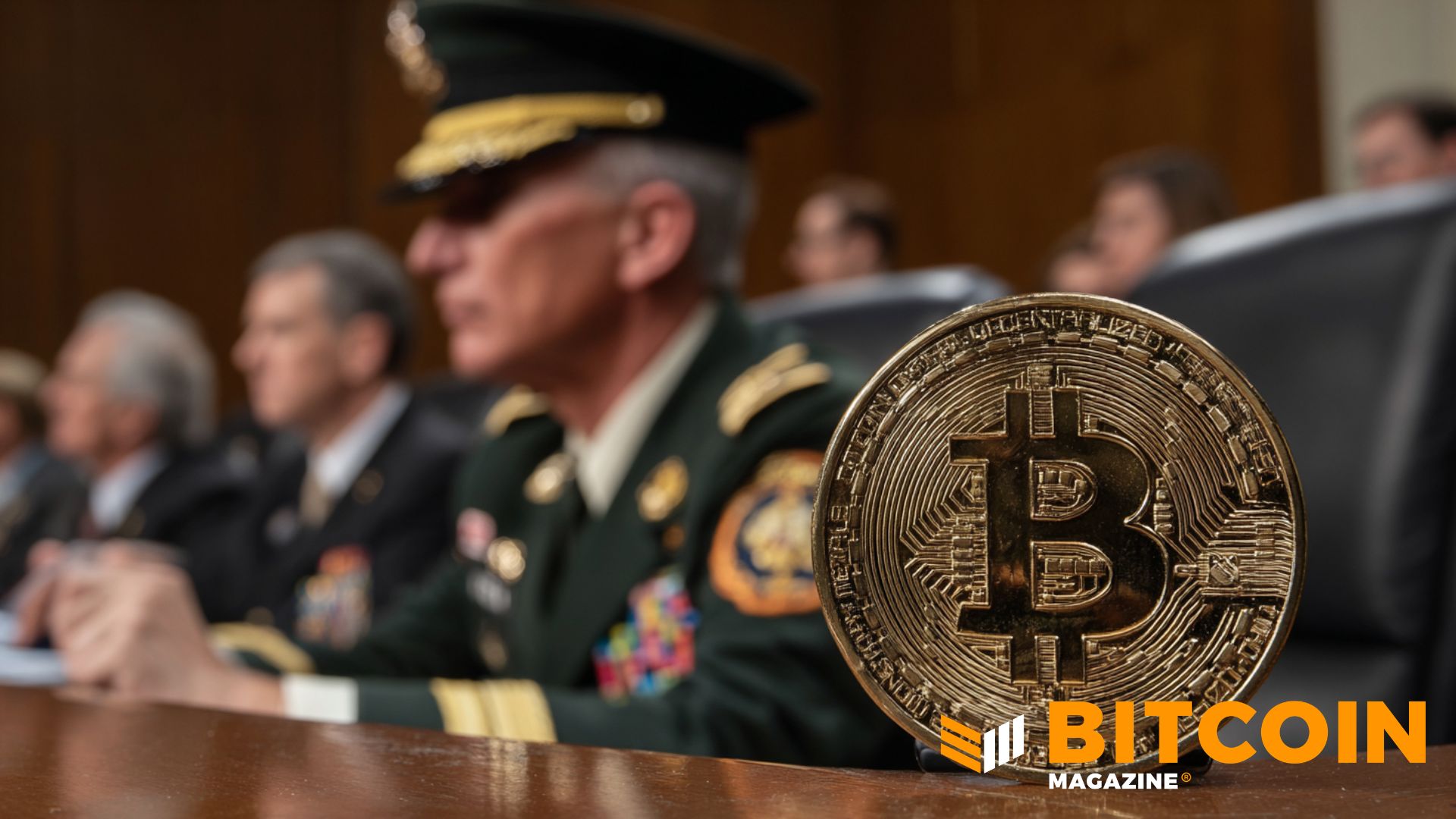
Admiral Samuel Paparo, commander of U.S. Indo-Pacific Command (INDOPACOM), told the Senate Armed Services Committee on Tuesday that Bitcoin represents a “valuable computer science tool as power projection,” offering a rare and notable endorsement of the cryptocurrency from one of the nation’s most senior military officers.
The comments came during a FY2027 defense authorization hearing on April 21, 2026, when Sen. Tommy Tuberville (R-AL) pressed Admiral Paparo on whether Bitcoin leadership gives the United States an edge against China in the Indo-Pacific theater.
“Bitcoin is a reality,” Paparo told the committee. “It’s a peer-to-peer, zero-trust transfer of value. Anything that supports all instruments of national power for the United States of America is to the good.”
He added that INDOPACOM’s research into Bitcoin centers on its underlying computer science architecture — the fusion of cryptography, blockchain, and proof-of-work protocols — and that those protocols “impose more cost than just securing networks,” extending to offensive and defensive cyber operations.
“Bitcoin shows incredible potential as a computer science tool,” Paparo said. “It’s a valuable computer science tool as a power projection,” he later said.
JUST IN:
United States Indo-Pacific Commander, Admiral Samuel Paparo, advises the Senate that "Bitcoin shows incredible potential as a computer science tool."
"Bitcoin is a reality, it is a valuable computer science tool as a power projection." pic.twitter.com/SyW9W0uXkg
— Bitcoin Magazine (@BitcoinMagazine) April 21, 2026
Bitcoin is not speculative
The testimony is notable for its framing. Paparo did not describe BTC as a speculative asset or financial instrument. He described it as a computer science system with direct cybersecurity applications — an argument with precedent in defense circles.
Space Force Major Jason Lowery, a national defense fellow at MIT, has spent years arguing that Bitcoin’s proof-of-work mechanism can deter cyberattacks by imposing physical, energy-based costs on adversaries, analogous to how conventional military assets deter physical aggression.
Tuberville’s line of questioning drew a direct line between BTC strategy and great-power competition. The Alabama senator noted that the Chinese Communist Party’s main monetary think tank published research last year examining BTC as a strategic asset.
China’s International Monetary Institute circulated a report titled “The Case for Bitcoin as a Reserve Asset,” with commentary noting that BTC is shifting from a speculative instrument to a strategic reserve consideration — a signal that Beijing is watching U.S. moves.
President Trump signed an executive order establishing the Strategic Bitcoin Reserve on March 6, 2025, seeding it with BTC seized through criminal and civil asset forfeiture. The White House has directed that government BTC holdings not be sold, treating them as long-term reserve assets — what crypto policy advisor David Sacks called “a digital Fort Knox”.
Tuberville co-sponsored the BITCOIN Act alongside Sen. Cynthia Lummis (R-WY) in March 2025, which would go further by directing the Treasury to acquire one million BTC over time, mirroring the scale of U.S. gold reserves.
Paparo did not offer specific legislative recommendations during the open session, saying he preferred to go on record in writing and dive deeper in a classified setting.
Editorial Disclaimer: We leverage AI as part of our editorial workflow, including to support research, image generation, and quality assurance processes. All content is directed, reviewed, and approved by our editorial team, who are accountable for accuracy and integrity. AI-generated images use only tools trained on properly license material. In Bitcoin, as in media: Don’t trust. Verify.
This post Top U.S. Pacific Commander Calls Bitcoin a “Valuable Computer Science Tool” for National Power And Security first appeared on Bitcoin Magazine and is written by Micah Zimmerman.