





A Bitcoin holder has moved 2,931 BTC worth about $188 million for the first time since October 2018, yet the coins still haven’t surfaced at any known cryptocurrency exchange.
On July 12, data from Arkham Intelligence showed that the coins moved from an address beginning with “356my” to a new SegWit address starting with “bc1qnzk.”
The originating address had received the 2,931 BTC eight years ago, when Bitcoin traded near $6,500. That position had increased almost tenfold in dollar value, with the top crypto trading around $64,000 at the time of the new transfer.

About nine hours later, the receiving address “bc1qnzk” forwarded the entire balance to a second destination, “bc1qyen,” in a separate transaction between the unidentified wallets.
As of press time, that second address still held the 2,931 BTC and had recorded no outgoing transaction. Arkham had not attributed the new destination to an exchange, custodian, or other identified entity.
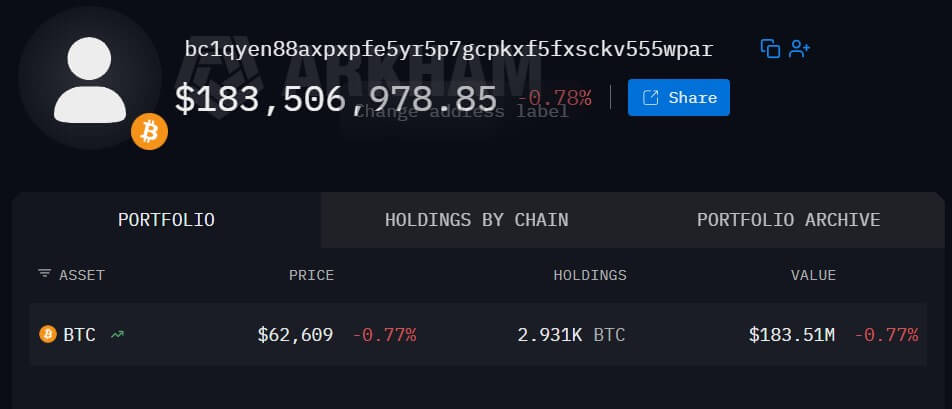
Each of the two large transactions sent nearly the full balance to a single address rather than dividing it among multiple destinations.
In view of this, market observers pointed out that this pattern is consistent with a wallet migration or a custody reorganization, although blockchain records cannot establish the holder’s identity, motive, or continued control over the coins.
Meanwhile, an unlabeled destination does not mean the coins avoided an exchange, broker, or over-the-counter trading desk. Blockchain attribution has blind spots, and newly created deposit or custody wallets often appear without labels.
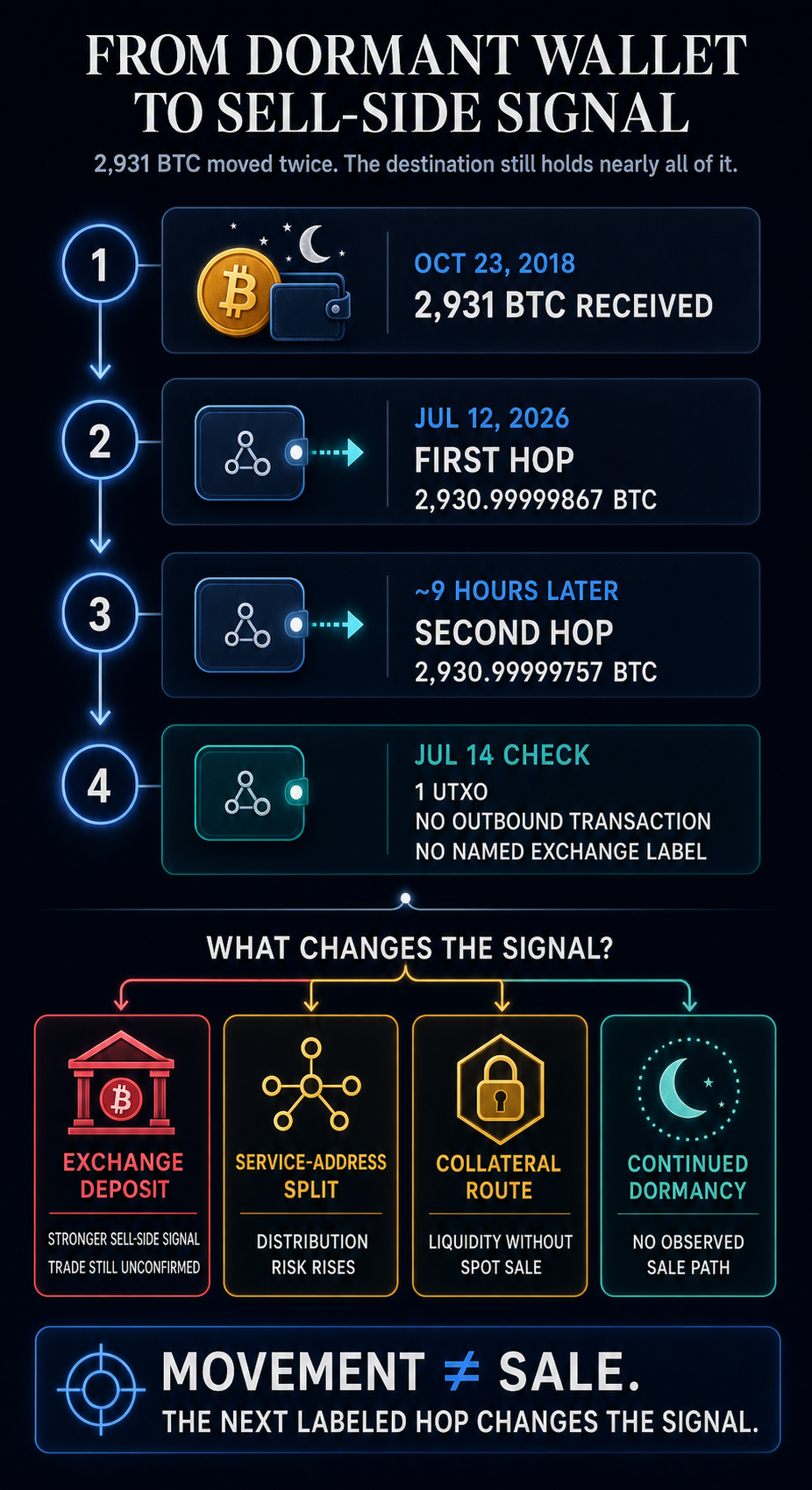
What would change the transfer’s signal?
A subsequent transfer to an address associated with an exchange would strengthen the possibility that the holder intends to sell some or all of the Bitcoin. Even then, a deposit would show only that the coins had become available for trading and not that a sale had occurred.
Meanwhile, a distribution across several addresses linked to exchanges, brokers, or other liquidity providers would also make the transfer look more like preparation for a sale.
However, CryptoSlate has previously shown how such large transfers can inflate on-chain movement without creating net new exchange supply.

On the other hand, the holder could choose to move the coins into an identified lender or collateral platform, which would create a different signal.
This would imply that the holder is using the BTC holdings to obtain liquidity without selling them, leaving the coins economically active but not necessarily adding them to the spot market supply.
Lastly, another full-balance transfer to an unidentified address could extend the current custody pattern rather than establish market distribution.
For now, the blockchain shows that a long-held Bitcoin position moved through two unidentified addresses.
However, the market signal around them would change if the coins entered a known exchange, were spread across liquidity-linked wallets, or moved to a platform where they could be pledged or sold.
The post Is a Bitcoin whale from 2018 about to cash in after awakening to transfer $188 million? appeared first on CryptoSlate.



