Senate Democrats are urging the Commodity Futures Trading Commission (CFTC) to reverse its latest directive on prediction markets, arguing that the regulator is pushing platforms to ignore existing court orders and state-level gambling restrictions.
The dispute centers on the agency’s November 5 interpretation requiring designated contract markets to end geographic restrictions within 30 days. The move could force platforms such as Kalshi and Polymarket to offer certain event contracts nationwide, even in jurisdictions where courts have ordered them to block access.
In a letter sent on November 16, the lawmakers warned that the CFTC’s position conflicts with state and tribal laws and could encourage companies to violate active judicial decisions.
Senate Democrats Demand CFTC Withdraw Its Geofencing Directive
The letter was led by Senator Adam Schiff of California and signed by eight other Democrats, including Amy Klobuchar, Elissa Slotkin, Gary Peters, Maria Cantwell, Patty Murray, Catherine Cortez Masto, Jacky Rosen and Alex Padilla. The senators argued that the CFTC’s interpretation of federal derivatives rules effectively requires prediction market operators to disregard restrictions imposed by courts in several jurisdictions.
They pointed to decisions involving Michigan, Nevada and Washington, as well as tribal lands in California. Courts in these cases have ordered platforms to stop offering certain prediction contracts and maintain geographic restrictions around affected areas.
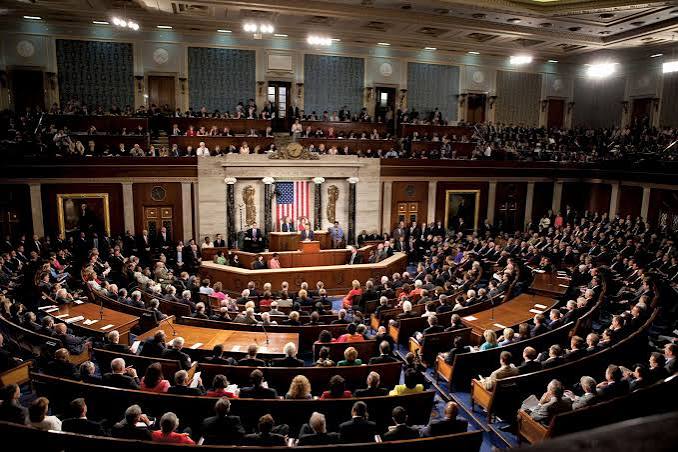
The lawmakers described the agency’s directive as incompatible with those rulings, warning that exchanges could be encouraged to offer contracts that judges have already determined violate applicable gambling laws.
They called on the CFTC to withdraw its interpretation or suspend its implementation until the ongoing legal disputes are resolved.
CFTC Chairman Mike Selig Defends Nationwide Market Access
The conflict stems from the CFTC’s position that federally regulated prediction markets should operate under a consistent national framework.
Chairman Mike Selig has argued that platforms registered as designated contract markets fall under federal derivatives law, which he believes takes precedence over state efforts to regulate their event contracts as gambling.
Under the agency’s November 5 interpretation, exchanges were told that restricting access based on a user’s location conflicts with federal impartial-access requirements. They were given 30 days to remove those restrictions or explain why they could not comply.
However, the senators disputed that interpretation, arguing that federal registration does not automatically override state and tribal gaming laws. They also cited decisions from the Sixth and Ninth Circuit Courts of Appeals supporting the ability of states to apply their gambling regulations to prediction market activity.
Louisiana and Arkansas Add to Prediction Market Legal Pressure
The regulatory dispute is expanding as more states challenge the industry’s business model.
Louisiana recently moved against prediction market operators, with a judge allowing state officials to pursue restrictions on certain event contracts. The state’s Gaming Control Board has previously argued that sports-related contracts and other event markets offered by these platforms constitute illegal gambling.
A temporary restraining order targeted several companies, including Kalshi, Polymarket, Robinhood, Coinbase, Gemini and Crypto.com. The CFTC responded by filing its own legal action to challenge the state’s restrictions, while some companies have sought to join the federal regulator’s case.
The agency is now involved in legal disputes with approximately a dozen states, reflecting how widely the disagreement over prediction market regulation has spread.
Supreme Court Could Ultimately Decide the Regulatory Dispute
The senators’ intervention comes at a significant moment for the CFTC and its oversight of prediction markets.
The commission currently has only one serving commissioner, Chairman Selig, despite being legally structured to have five members. The White House has nominated two additional candidates: Nathan Anonick, a Republican Senate Agriculture Committee staffer, and Matthew Rowland, a former senior adviser to a Democratic commissioner.
Meanwhile, conflicting court decisions could push the broader jurisdictional question toward the US Supreme Court. Until a clearer legal framework emerges, prediction market operators may continue facing uncertainty over whether federal derivatives rules or state gambling restrictions determine where their contracts can be offered.
The dispute is particularly important for platforms seeking to expand into mainstream financial markets, as access to users across different states remains central to their business models.
Do you think the CFTC should have exclusive authority over prediction markets, or should individual states retain the power to restrict these platforms? Could the growing legal conflict slow the expansion of Kalshi, Polymarket and other event-contract exchanges?