Bitcoin could be approaching an important turning point in decentralized finance as Babylon, one of the largest Bitcoin staking protocols, considers replacing its existing staking model with a new system built around Bitcoin-backed lending. The development comes as institutional Bitcoin lending continues gaining attention across traditional financial markets.
The proposal comes from Babylon co-founder Fisher Yu, who suggested ending Bitcoin staking before the end of 2026 to concentrate on Trustless Bitcoin Vaults (TBV). The new infrastructure would allow BTC holders to borrow stablecoins without selling their Bitcoin, wrapping it, or transferring custody to a centralized intermediary.
The development raises an interesting question: Could borrowing against Bitcoin become more attractive than earning staking rewards?
Why Babylon Wants To Move Beyond Bitcoin Staking
In a November 17 governance proposal, Fisher Yu explained that Babylon’s next phase could focus on making native Bitcoin more useful across decentralized financial applications.
The proposal follows Aave’s November 9 governance approval of an initial plan to support Bitcoin collateral through Babylon’s Trustless Bitcoin Vaults.
Under the proposed transition, Babylon would discontinue new Bitcoin staking registrations, reduce staking rewards to zero, and disable staking finality. Existing participants would retain the ability to withdraw their BTC under the protocol’s established rules.
Yu also suggested reducing BABY token inflation from 5.5% to 2%, potentially changing the project’s long-term token economics.
However, the proposal remains under discussion. No final governance vote or implementation date has been announced.
Could Bitcoin-Backed Lending Change Investor Behavior?
The most interesting aspect of Babylon’s proposal is how it could change the way long-term Bitcoin holders access liquidity.
Traditionally, investors looking to raise capital from their Bitcoin holdings have faced several choices: sell BTC, borrow through a centralized lender, or use wrapped Bitcoin in decentralized lending protocols.
Babylon’s proposed system introduces another possibility.
Through Trustless Bitcoin Vaults, users would lock native BTC on the Bitcoin blockchain while borrowing assets such as USDC or USDT through Aave V4.
Unlike traditional wrapped Bitcoin lending, the underlying BTC would remain on its original blockchain.
The approach resembles other developments in decentralized finance, including Aave’s Bitcoin collateral proposal, which explores allowing institutions to borrow against Bitcoin held with regulated custodians.
This could become particularly attractive to long-term investors who believe Bitcoin will appreciate but still need access to capital.
Instead of selling their holdings, they could potentially borrow against them while maintaining exposure to Bitcoin’s future price movements.
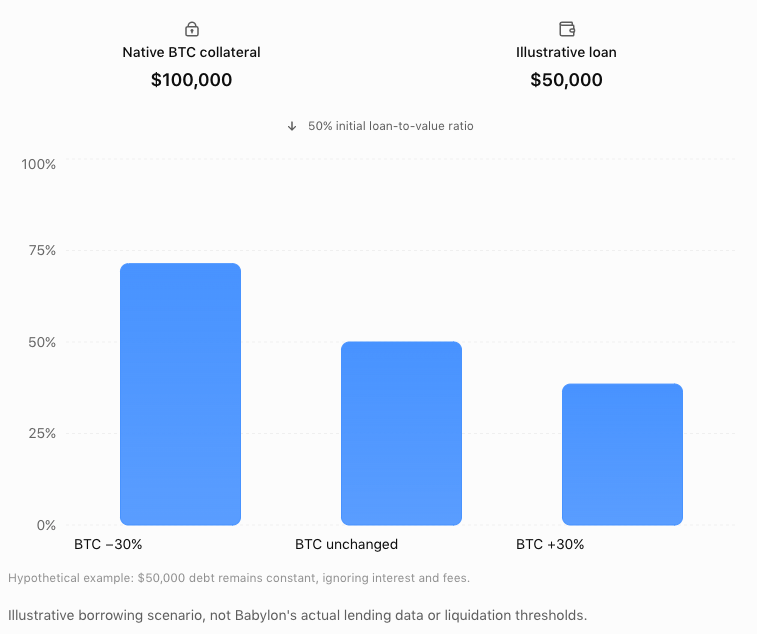
Nevertheless, borrowing introduces interest costs and liquidation risk. If Bitcoin falls significantly, borrowers may need to add collateral or repay debt to avoid losing their positions.
What Happens To The Bitcoin Already Staked?
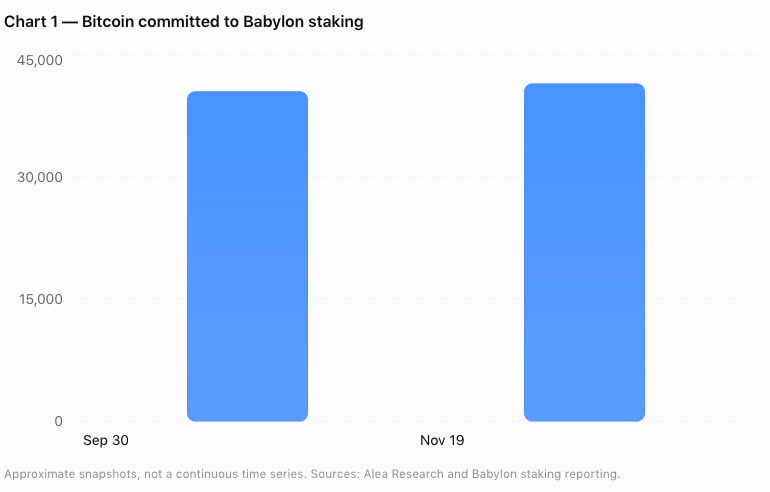
Babylon currently has approximately 41,000 BTC committed to its staking infrastructure, representing billions of dollars in Bitcoin.
The proposed transition would not automatically transfer those holdings into lending vaults.
Instead, participants could withdraw their Bitcoin under existing rules and independently decide whether to use the new lending applications.
That distinction matters because a successful transition would depend on how many existing stakers actually choose to become borrowers.
What This Could Mean For Bitcoin’s Long-Term Demand
From a broader market perspective, the potential transition represents another step toward expanding Bitcoin’s financial utility.
Bitcoin has traditionally been viewed primarily as a store of value. However, developments in collateralized lending are creating additional ways to use BTC without immediately selling it.
Similar developments are already emerging across blockchain ecosystems, with projects such as Sui’s Hashi Bitcoin lending initiative exploring how Bitcoin can support new financial applications.
If more investors begin using Bitcoin as collateral, it could encourage longer holding periods among participants who would otherwise sell assets to access liquidity.
The effect would not necessarily be immediate. Borrowing demand, interest rates, security, and liquidation conditions would all influence adoption.
There is also an important distinction between locking Bitcoin as collateral and permanently removing it from circulation. Collateral can eventually be released or liquidated, meaning lending activity does not automatically reduce market supply.
Still, the development highlights a potentially significant evolution in Bitcoin’s role within decentralized finance.
With Babylon targeting a restricted launch in late 2026 and broader access expected in early 2027, the coming months could reveal whether native Bitcoin-backed lending becomes a meaningful alternative to traditional staking.
For long-term Bitcoin supporters, the bigger story may be that BTC is gradually becoming more than an asset investors simply buy and hold.